Exploring our world through the prism of surrealistic imagery and occasional written opinion with a critical eye towards themes in Western media (the fragile female body image in particular) all while embracing life's quirky facets and beautiful imperfections ...with a great deal of glue
4' x 3' abstract canvas from March 2015 that I updated with changes to the lower right this September
3' x 2' companion piece
"Chef BoyarDior" -- 31" x 8" mixed media collage (September 2017)
"Oats For Women" -- 16" x 8" mixed-media collage of magazine paper, acrylic house paint, raw oatmeal, and Modge Podge (November 2017 with upper detail added June 2019)
The first and only pencil drawing I've made in at least a decade, based on a photograph of my sister's infant boy, who's marvelous.
Eight o'clock on a New England summer night, from what could have easily been swapped for a landscape by LINDEN FREDERICK, currently my favorite modern painter (whose Night Stories I saw in person on my birthday at CMCA).
The peach-haired and dimpled daughter of a close friend from high school. She wears a ruffled dress I gave her on the day she turned four years old. As I type this now her family awaits the birth of a sibling. I didn't take this picture but I admire the repeated mustard colors!
One of my mother's summer lilies, August 8th (as captured by my iPhone 6s with Instagram filter effects).
My nephew Elias in Owls Head two days before he turned sixteen months old (September 4, 2017). This was his first beach walk on our American shores.
"Cottony" cobwebs angled off a stone perimeter catch late-day sunlight (September 23, 2017)
Light on our streets arranges itself in the shapes I like to use in abstract art (September 29, 2017)
Deceased common startling encountered on a walk to the boatyard (October 2, 2017)
Marbled veins of pomegranate were revealed upon prying off an "eggnog" batch of floor paint (October 19, 2017) -- Can you spot the projects I used it in?
Sundown on October 16, 2017 at quarter-to-six (Thomaston, Maine)
Brown bat encountered on Halloween Day (!) in our back hallway, promptly relocated to my mother's patio planter.
Dollops & smears of paint on clear plastic with shadows beneath (November 2, 2017)
---- MEASURING THE BREADTH OF A YEAR ---- CREATIVE IMAGERY IN RANDOM FREEFALL, 2015-2016 For more, please visit my Instagram feed: @lorenastackpole
AUTUMN 2015
Round like a circle in a spiral, like a wheel within a wheel...
Flowers sampled from my mother's garden
Was the sound of distant drumming just the fingers on your hand?
Deceased squirrel with lavender sprigs (supplied by me)
And the world is like an apple whirling silently in space...
"Golden hour" pre-sunset colors cast against the side of a church vestry
WINTER 2015
Half-remembered names and faces, but to whom do they belong?
Self-portrait in cashmere turban & faux-fur
Keys that jingle in your pocket, words that jangle in your head...
Peanut's doppleganger (a surprise stuffed "twin" for the Pomeranian I dogwalk -- I furnished both with the red holiday bows)
Like a tunnel that you follow to a tunnel of its own...
Handmade Christmas cards -- two different versions (front & back)
Like a snowball down a mountain, or a carnival balloon...
New Year's Eve along East 8th Street, NYC (above my head)
Like a door that keeps revolving in a half-forgotten dream...
New Year's Eve along East 8th Street, NYC (below my feet)
SPRING 2016
Down a hollow to a cavern where the sun has never shone...
"The Real O'Neals" debuts on ABC -- worth acknowledging because it features a rare male character, Jimmy, who proclaims to suffer from an eating disorder -- a detail abandoned after the premiere episode (above, a magazine promo page bathed in sunlight)
"It's important to acknowledge how the performance of manhood can be restrictive, and in many cases, harmful. Jimmy feels constrained by his role as a champion wrestler, so he wants out. This would've been the perfect time to revisit his anorexia, but once again, there was no mention of it. It's safe to say that detail has been abandoned — Eileen cured him with Jesus pancakes or something [by the end of the pilot] — and that is a missed opportunity. It's tough to make light of an eating disorder, so maybe it's best that it was abandoned. Nevertheless, it would've fit perfectly with Jimmy confronting the idea of what a man is supposed to look like."
Never ending or beginning on an ever-spinning reel...
VIDEO, may not play on all systems -- "Stir of Shadows" (agitated branches cast their movements against our home's exterior) Lovers walk along a shore and leave their footprints in the sand...
Collage box with ModPodge glaze for my sister, themed around her screenplay "Ye Deep", set on Nantucket Island
SUMMER 2016
Like the ripples from a pebble someone tosses in a stream...
Photograph by Erica Shires of me on the rocks of coastal Maine at sunrise (vintage prom dress chosen & procured by me)
Pictures hanging in a hallway and the fragment of a song...
Another portrait by Erica, in a '40s-era antique nightgown with my mother's globe thistle
When you knew that it was over you were suddenly aware...
A fallen finch, laid to rest with morning/mourning glories
AUTUMN 2016
That the autumn leaves were turning to the color of his hair?
Treeline "halo" bordering one side of our Maine property
Why did summer go so quickly? Was it something that you said?
"Ayam Cemani" (black glossy enamel over chalkboard paint base with sequins, smashed sunglasses lenses affixed with ModPodge on 26" x 36" antique canvas)
As the images unwind...
(Untitled on 11" x 13" canvas, with same materials as first work)
(Detail from mixed-media art shown above)
Like the circles that you find...
Errant pompom blossom, in swirls of shadows on concrete -- an effective punctuation until my next entry
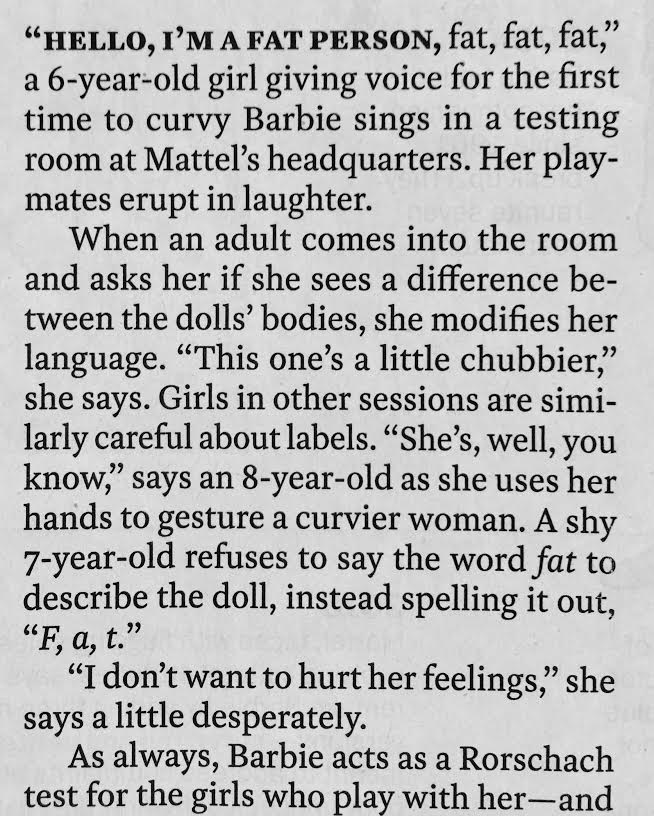
Milhouse Van Houten: You PROMISED me a JOB, Dad! I was going to buy a 'Fat Barbie'!
Kirk Van Houtem:It's 'Curvy Barbie' ---and that would mean you'd have to buy ALL NEW CLOTHES. - dialogue exchange from Season 28 of THE SIMPSONS
It was lazy writing and, frankly, an easy joke to cast, given the almost absurd ubiquity of the target and its highly-touted societal implications. In what was no doubt a sobering indication of modern animation's protracted production process, The Simpsons last Sunday took aim at one of the most daring launches in the landscape of toy manufacturing this year --- a newsworthy event, yes, but one that was far more topical in the earlier months of 2016 --- those slow vernal days preceding Olympic commotion and, later, election fever. The storm of discussion and general media buzz surrounding Barbie's revamped range of body molds --- the fleshiest of which has been delicately compared to pop icon Katy Perry's "womanly" hourglass --- is now at a mere murmur compared with its initial reception last February. Expanded, updated, and democratized, we have transitioned into a world where our playthings can, if we so choose, summon a healthy human form and not only the expectations of what works best when catering to adult fashions and interests. (These may still be realized, but more exclusively in relationship to those mature collectors with whom I identify, having on occasion acquired Limited Edition dolls intended for show, not out-of-box use.) Barbie's inherent character has shirked definition in her 60-year history of retooling, tiptoeing between a wide range of careers but never entirely escaping a bleached Wonderbread/Stepford Wife mien. Upending this "dumb blonde" attitude was the central theme of The Simpsons' 1994 episode "Lisa vs. Malibu Stacy" --- and one can easily intuit that Mattel's designers intend to assume the mantle when rebranding their doll for the real world.
SIDE NOTE: It is anyone's guess why J. Stewart Burns, accredited Simpsons scribe of "Friends and Family" (cited above), chose to abandon tradition and not apply the well-established euphemism of Malibu Stacy when referring to Barbie-esq products in the alternate universe of their nebulously-placed, "every town" Springfield, U.S.A. Any viewer who knows his Rod from Todd Flanders is aware of this tradition. Similarly -- but far less consistently -- Apple products are switched-out for the satiric, fictional "Mapple" computer and accessories empire.
I, for one, am cautiously optimistic and encouraged by Mattel's alterations (especially the option of a flexible foot sole without permanently pointed toes). The "standard" and "tall" figure molds might still receive the same criticisms that have always dogged the company's company's golden goose --- that the toy encourages impressionable girls to aspire towards difficult-to-achieve physical proportions, and in so doing promotes eating disorders and body dysmorphia. Admittedly, Barbie is not now nor ever will be a wholly sensible avatar and should not be released into the nursery or wreck room with total abandon. But is there really anything that we deposit into our children's hands that doesn't come with a cursory introduction or, in special cases, more nuanced discussion? Doesn't responsible parenting command that we take measures to engage in and monitor the imaginative play of our charges, to help outline where, how, and why gametime deviates from reality? Surely, launching an early, gentle dialogue concerning body image/inclusivity is an improvement over leaving this sensitive issue to simply "work itself out" via other channels of education, risking less family involvement and with it a better guarantee of cautious, sensitive oversight?
TIME February 8, 2016
Mattel, Inc. El Segundo, CA headquarters (Wikipedia) / THE SIMPSONS (Season 5)
TV'S LATEST TREND DELIVERS "COMPLICATED" ISSUES VIA RELIABLE CONDUIT:
H U M O R
"The best series wake us up; the worst are numbing agents."
So stated The New Yorker's television critic Emily Nussbaum early last year; that April, her column examined the legacy of Norman Lear's All In The Family and the reemergence of "agitating comedies." Whether on cable, basic network, or streaming channels, edgy themes have seized command -- pushing to the margins lighter fare in the last two years. Between Orange Is the New Black, The Unbreakable Kimmy Schmidt, Louis, Mom, Nurse Jackie, Married, Girls, black-ish, Crazy Ex-Girlfriend, Last Man on Earth, and just-released Master of None, we see, respectively (and in some cases collectively): dysfunction and corruption within America's correctional facilities and hospitals; brainwashing by evangelicals and cults; sexual violence; abduction; skewered female body image and with it gender disparity; race relations and identity; class elitism; alcoholism; parental malaise; marital dissatisfaction; fire arms misuse; human extinction; nervous breakdowns (with stifling OCD and without, not to mention occasional song-and-dance routines); cancer; mental/medical crises and addictions of various ilk. And this is only just within the sitcom landscape, speaking nothing of sketch shows airing on Comedy Central (crass, brassy Inside Amy Schumer, wickedly sardonic Key & Peele) or of that same channel's news parodies trading in what The Colbert Report dubbed "truthiness" (see: The Daily Show,Nathan For You). Then there are the limitless, open-format YouTube feeds of even greater genre ambiguity, as well as well-established viral-video generator Funny or Die -- known for quick-to-the-draw short-form videos enlisting high-profile celebrity casts and topical, buzz-worthy gags. Programs have entered such nebulous territory in recent seasons that they straddle categories; OItNB resists being defined as strictly "comedy" or "drama" and submits itself based on a quantifiable point that everyone can agree on: time. It's easier to measure technicalities (such as running length) than it is to count jokes, after all. Humor is less easily nailed-down, less identifiable. That's why at The 67th Emmys this September Orange was thrown together with "serious" shows like Homeland, Mad Men, Downton Abbey, House of Cards, and Game of Thrones, based almost entirely on its hour-long structure. Life, and with it its media mirror, is "a lot more nuanced than that" -- to borrow a defense from the titular Crazy Ex-Girlfiend, pitching her dilemma in one of many musical interludes.
You're the Worst, the latest comedy to adopt a saturnine sheen (albeit intermittent to ballsy. snide jocularity and sophomoric activities) is another will-they-or-won't-they young-adult romance dumped amidst your obscure cable fields. In the November 13 issue of Entertainment Weekly -- on newsstands -- a spotlight is awarded the executive producer and female lead by writer Danielle Nussbaum (not of relation to Emily). Even though it has built a reputation for raw, honest opinion and snide bravado, "fans were [nonetheless] shocked by its latest plot twist." Below, her featurette from page 18 titled, 'YOU'RE THE WORST' GETS REAL DARK --AND REAL GOOD:
You're The Worst, FXX's sleeper hit about four thirty somethings treading in a pool of ennui, has hijacked the zeitgeist with its poignant writing and appallingly likable characters. But beyond the coke binges, rap feuds, and Sunday Fundays, season 2 (airing Wednesdays at 10:30 p.m.) has started its biggest conversation yet by tackling the complicated subject of depression.
In the Oct. 21 episode, Gretchen (Aya Cash) admitted to her boyfriend, Jimmy (Chris Greene), that she suffers from clinical depression. It's not the first time a TV character has struggled with the illness, but the confession, from a foulmouthed partner with boundary issues, was surprisingly candid.
"When the word depression came up, it sounded exciting -- but also scary," says show creator Stephen Falk. "Would people stop watching and say, "I thought this was a comedy'? But for all the intentional silliness [on the show], I want these characters to feel real."
Falk is using the show's format as a storytelling tool. Each episode since the reveal has been an interpretation of Gretchen's coping mechanisms, from the cabin-fever setting of attempting to stymie a relapse to the horror house of someone trying to "fix" her. This week, Worst takes such a creative risk, you might think you're watching the wrong show. For the first six minutes, viewers are immersed in the lives of a hip Silver Lake couple, with dark a familiar You're the Worst character in sight. It's not until we get a glimpse of Gretchen in the background that we understand she's trying to feel normal by appropriating someone else's reality.
For her nuanced performance, Cash drew from real-world encounters. "It was completely in line with my own experiences of people who have clinical depression of which I've been around quite a few," she says. "We don't see the episodes before they air, so I watch with everyone else, and the response was so moving, it felt like we got this right."